
Pricing
What Really Drives Dumpster Rental Cost in Lubbock, TX
Flat rate or a low headline plus stacked fees? The real machinery behind a Lubbock dumpster invoice: weight, dry runs, distance, hail season and wind, and how to get a firm number.
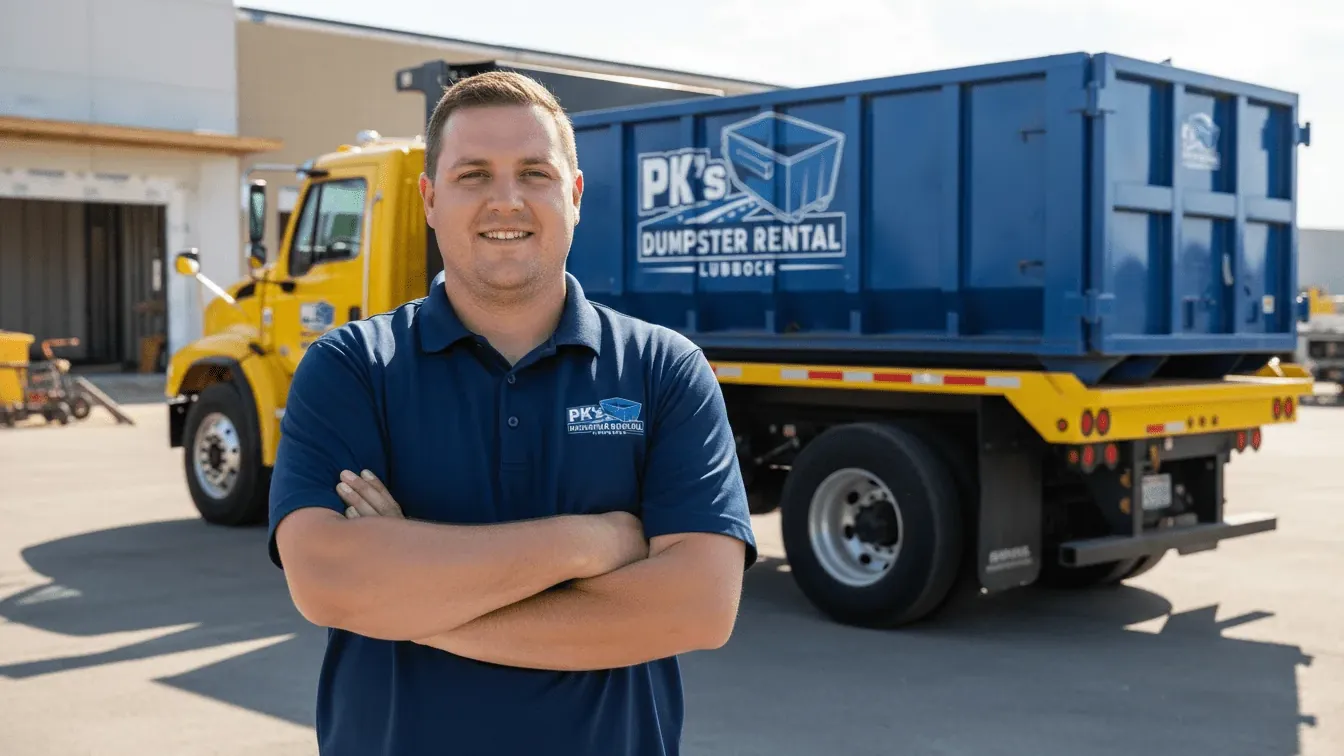
The first thing most people ask is "what does a dumpster cost in Lubbock." Fair question, and the honest answer starts with another question: what is going in it, where is it going, and how heavy will it be when the truck picks it up. Two jobs on the same street can land in very different places on the invoice, and the difference is almost never the size of the box.
I have been running roll-offs on the South Plains since 2015, and most of the surprises I have watched people get on a bill were avoidable. So instead of numbers, here is the machinery behind the figure at the bottom of a Lubbock dumpster invoice, and which levers you control.
Flat rate versus the headline rate that grows
There are two ways to sell a roll-off. One is a flat rate: a single number, quoted up front, covering the whole cycle. The other is a low advertised base rate with everything unbundled behind it — delivery, pickup, fuel surcharge, environmental fee, a per-ton disposal charge on top of the tipping fee, a daily rate that starts on day one, an administrative fee to tie it together. The second always looks cheaper in a search result. It rarely finishes cheaper.
We run flat. Not out of generosity, but because it is easier to run a business where nobody argues about the invoice. Agree the number before the truck rolls and you can plan around it, my drivers are not the bearers of bad news, and a builder can bid a job without a variable hanging off the end. The trade-off is that a firm number needs real information, which is why we ask more questions on the phone than the cheap-headline outfits do.
What a flat rate includes — and what it does not
Ours covers delivery, a set rental window, a weight allowance in tons, the haul back out, and the tipping fees for everything inside that allowance. Protection boards under the rails come standard — a real cost we absorb rather than a line item, as our notes on protecting a driveway during dumpster delivery explain.
What no flat rate can include, because these depend on what happens after we leave:
- Texas sales tax. Waste collection is taxable here. Calculated on the quoted amount — not a hidden fee, but not inside the quote either.
- Overweight tonnage. The scale decides this, not us. Anything over the allowance bills per ton, at a rate you should be told before delivery.
- Extra days. Keep the box past the agreed window and there is a daily rate. Ask what it is when you book, not when you need it.
- Dry runs. If the truck arrives and cannot deliver or pick up, that trip still happened.
- Prohibited material. Tires, batteries, refrigerant appliances, liquids and anything containing asbestos are handled separately, if at all.
Weight is the biggest variable, and South Plains debris is heavy
Remember one thing: volume gets you the right size container, but weight decides what the haul costs. Everything that comes out of the ground on the Llano Estacado is dense.
Caliche, concrete, brick, block, mortar, floor tile, dirt and sod all run roughly 2,400–2,800 pounds per cubic yard. That is not a rounding error, it is a multiplier. A twelve by twelve patio slab four inches thick is about 1.8 cubic yards — well over two tons before you touch the walk or the caliche base under it. Pull up a caliche driveway past the Loop and you are moving tonnage, not cubic yards. Fill a large box with that and no legal truck in Texas is lifting it, which is why heavy debris goes in a small container and we come back. Our page on concrete and heavy debris hauling covers staging, and the 10 yard roll-off exists almost entirely for this reason.
The counterintuitive part: a small container hauled twice usually beats an overweight large one hauled once, because overage compounds fast. If somebody quotes a 30 yard box for a concrete tear-out without asking about tonnage, they are not the one planning to eat that difference.
Roofing is measured in squares and layers
Tear-off has its own arithmetic. A roofing square is 100 square feet of roof surface; a square of three-tab asphalt runs around 250 pounds and dimensional shingle heavier. Then multiply by layers. A Tech Terrace bungalow carrying three layers from decades of hail is three times the tonnage of the same roof stripped once, plus felt, ridge cap and wet decking. That is why "it's just a small roof" and "twenty-eight squares, two layers" get very different quotes for the same address. The roofing tear-off dumpster size guide walks the math.
Clean loads versus mixed loads at the scale
A clean, separated load of one material is the cheapest thing you can hand a scale. Concrete and masonry can go to a recycler; clean metal has value; clean brush gets ground for mulch rather than buried. Texas has no statewide yard-waste landfill ban, but the City of Lubbock runs brush collection and a citizens collection station precisely because clean green waste has somewhere better to go.
Throw one bag of household trash into a clean concrete load and it stops being clean concrete. The whole container is now mixed municipal waste, priced as such, with the recycling route closed. It works the other way too: a stray tire in a demolition load turns a routine tip into a rejected one. Sorting on the ground is free labour that buys a cheaper tip — our guide to what can and cannot go in a dumpster in Lubbock County covers the exclusions.
Dry runs: four causes, four fixes
A dry run is a wasted trip — truck, driver, fuel and a route slot spent on nothing. Every one I have had came from one of four things.
- A vehicle parked in the spot. Somebody's truck, a trailer, a sub who showed up early. Cone it off the night before and tell the crew. Most common cause, easiest fix.
- A locked gate on a county property. Common out toward Woodrow, Idalou and the farm ground, where the box sits inside a pipe gate that gets locked at dark. Give us the code or meet the driver.
- A load heaped above the rails. Material proud of the top rail cannot be tarped, and an untarpable load cannot legally travel. Level as you go.
- Prohibited material on top. A pair of tires, a five gallon bucket of paint. The driver sees it, the load stops. Pull those before pickup day.
All four cost ten minutes of walking the site the evening before.
Distance and where the job sits
Travel is real cost. A drop inside Loop 289 and a drop at Brownfield are not the same trip. We run Lubbock County and across the South Plains — Wolfforth, Shallowater, Slaton, Idalou, Levelland, Brownfield, Post — and the further out you are, the more the round trip to disposal weighs on the number. Access adds to it: a caliche two-track that is fine in October is a different proposition after a wet week. Check our South Plains service areas so mileage is priced in rather than discovered later.
Season, and why timing moves the number
Three cycles set demand here, and demand sets lead time.
Hail season, March through June. After a big cell every roofer on the South Plains books at once, adjusters stack up, and availability tightens across the whole market. The hail and storm damage cleanup guide covers moving fast; the short version is that whoever calls first gets the box.
Texas Tech turnover, May and August. Thousands of rentals turn over in the same fortnight twice a year, and Tech Terrace, Maxey Park and the streets north and east of campus are heavily rental. Managers who book turnover cleanouts early get their preferred days. Everyone else takes what is left.
Cotton harvest, October through December. Module trucks on the highways, outbuilding and shop cleanouts across the county, longer routes.
None of that is a surcharge. Flexibility is simply worth something — take a Tuesday instead of a Saturday in hail season and you are an easier job to schedule. If you cannot wait, same-day and next-day delivery is what it is for.
Wind: a load that blows out costs you twice
This is the Lubbock-specific one nobody else writes about. We are one of the windiest cities in the country, and a container full of insulation, cardboard, siding offcuts or plastic sheeting will redistribute itself across three blocks on a 40 mph afternoon. Blowing dust and haboobs roll through in spring; the National Weather Service office here earns its keep.
A load that blows out costs you twice — once in cleanup, in your time or a neighbour's yard and a code complaint, and again in rehandling, because everything you chase down still has to go back in the box and get hauled. Load heavy on top of light, keep it below the rails, tarp or net anything that can fly. Our piece on securing a dumpster load against wind and dust goes through it properly.
Cost drivers at a glance
| Driver | What it is | How to control it |
|---|---|---|
| Container size | Cubic yard capacity and its weight allowance | Size off the material, not the pile — see the Lubbock sizing guide |
| Material density | Caliche, concrete, brick, tile, dirt, sod at 2,400–2,800 lb per cubic yard | Small box and a second haul, not one overweight pull |
| Roofing tonnage | Squares times layers, plus felt and wet decking | Count squares and layers before you call |
| Load contamination | One wrong item turns a clean load into mixed waste | Keep concrete, brush and metal in their own loads |
| Dry runs | A trip with nothing to show for it | Clear the spot, unlock the gate, stay below the rails, pull prohibited items |
| Rental duration | Days beyond the agreed window | Book the window you need, call for pickup when you finish |
| Distance | Round trip out to Slaton, Levelland, Brownfield or Post | Give the exact address, flag soft or narrow access |
| Season and lead time | Hail season, Tech move-out and move-in, cotton harvest | Book early, stay flexible on the day |
| Wind loss | Light material leaving the container | Heavy on top of light, below the rails, tarped or netted |
| Prohibited material | Tires, refrigerant appliances, liquids, asbestos | Route them separately, never bury them in the load |
How to get an honest all-in number on the phone
Give the person on the other end enough to work with, then ask for the whole thing in one figure. Have ready: the exact address, the material, roughly how much, whether it is separated, where the box will sit and on what surface, and your dates. For a roof, squares and layers. For concrete, dimensions and thickness.
Then ask four questions in this order. What is the total, all in, including tipping fees. How many tons are included and what is the rate per ton over that. How many days are included and what is the daily rate after. What else could add a charge. Anyone who answers those cleanly is quoting a real number. Anyone who gets vague on the second or fourth is planning to fill in the blank later.
One caveat: rules on disposal, tax treatment and regulated materials do change. Asbestos work in Texas falls under the Texas Department of State Health Services, waste handling under the TCEQ, and local collection programs through the City of Lubbock. Confirm anything that affects your job with the agency before you start.
For a firm, flat number on a South Plains job, call PK's Dumpster Rental Lubbock at (806) 758-7942 and describe the work. We will ask about material, weight, access and dates, quote one figure with the tipping fees inside it, and tell you plainly what could move it. Or send the details through our contact page and we will come back with a number you can put in a bid.
Questions this guide did not answer? Call (806) 758-7942. We would rather spend two minutes on the phone than have you order the wrong container.