Disposal Rules
What Can Go In a Dumpster in Lubbock County?
The full accepted and prohibited materials list for Lubbock and Lubbock County, including the yard-waste rule Texas does not actually have, asbestos in older housing, and farm chemical disposal.
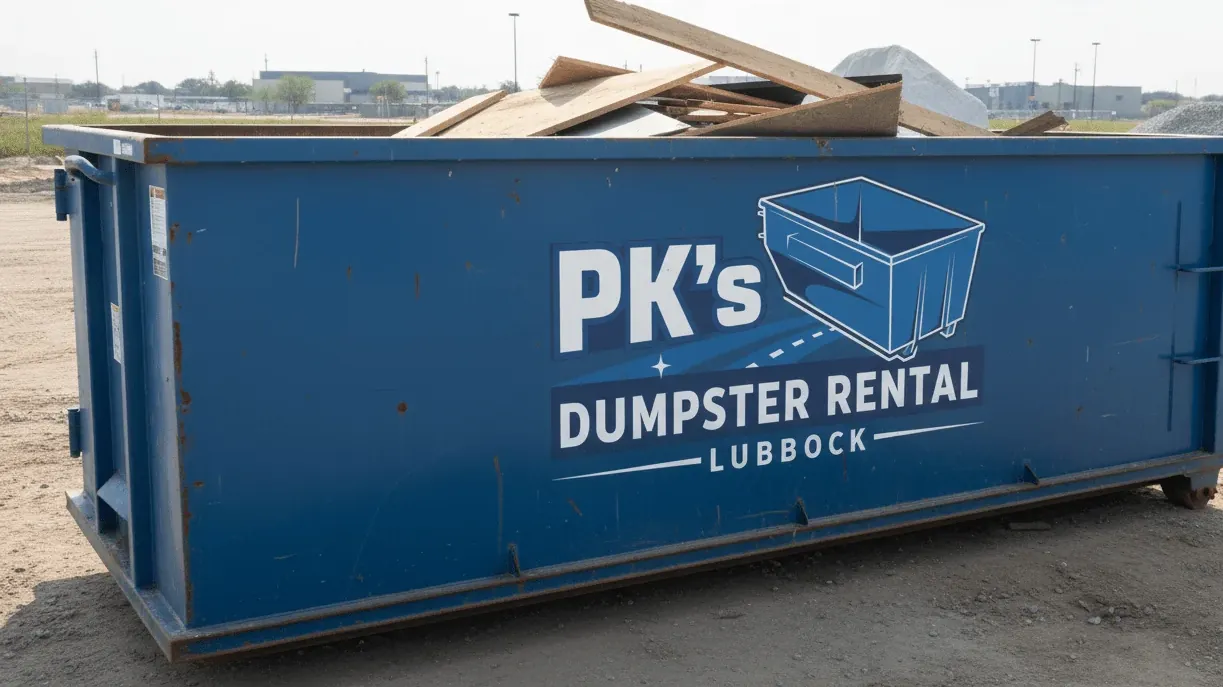
The question comes in a dozen ways a week. Somebody is standing in a garage in Tech Terrace or a shop building out past FM 1585 holding something they are not sure about, and they want an answer before it goes over the rail. Here it is, sorted the way we sort it: what goes in without anybody thinking twice, what is better kept out even though it is legal, and what gets a load rejected at the gate.
Most of it is simple. The list of things we cannot take is short, and almost all of it comes down to liquids, pressure, and things that poison the ground.
The easy yes: construction, demolition and household debris
Ordinary construction and demolition debris is the bread and butter of every roll-off on the South Plains. Drywall, lumber, framing offcuts, sheathing, trim, doors, windows, siding, insulation, cabinetry, countertops, flooring, tile, carpet and pad, roofing shingles and felt, fencing, decking and general jobsite trash all go in a construction debris container without a second thought.
Household junk is the same story. Furniture, mattresses and box springs, clothing, toys, boxes, books, garage shelving, broken lawn furniture, dishes, small appliances and the twenty years of accumulation out of an attic or a backyard shed are all fine. There are no basements here, so the volume comes out of garages, attics, sheds and rented units, and an estate cleanout container handles the lot.
Brick, block, mortar, concrete rubble, caliche, dirt, sod and asphalt are all accepted, but they belong in a small container on their own. Dense material runs somewhere around 2,400 to 2,800 pounds per cubic yard, so a 10 yard box hits its weight allowance while it still looks half empty. That is why we run a separate heavy debris service rather than letting people bury a slab under a house full of furniture. Clean concrete and caliche also have a second life as fill and base, which they only get if no wood or trash is mixed in.
Yard waste: what Texas actually requires
Plenty of national guides will tell you your state bans yard waste from the landfill. Texas does not. There is no statewide yard-waste landfill ban here, and anybody telling a Lubbock homeowner otherwise is copying a rule from somewhere else. Brush, limbs, grass and leaves can legally go in a container.
That said, we still push people toward keeping green waste as a separate clean load, for two practical reasons. Clean brush with no lumber, no wire and no trash in it can be ground for mulch instead of buried, which is a better outcome and usually a cheaper one. And the City of Lubbock already runs brush collection along with a citizens collection station where residents can take yard waste and a range of other material. Between city brush service and a dedicated yard waste container, there is rarely a reason to mix limbs into a demolition load. Check current rules with the City of Lubbock before you haul anything, since collection schedules and accepted-material lists get revised.
One local wrinkle: burning is not the fallback it is in wetter parts of the country. Drought and county burn bans are routine on the Llano Estacado, and when a ban is in effect burning brush is illegal. The container is the legal option, and out in the county you can confirm current burn status with Lubbock County.
The materials table
| Material | Accepted? | Where it goes instead |
|---|---|---|
| Wood, drywall, siding, roofing, flooring, cabinetry | Yes | — |
| Furniture, carpet, general household junk | Yes | — |
| Brick, block, concrete, caliche, dirt, asphalt | Yes, clean and in a small box | Separate heavy-debris load; clean rubble often reused as fill |
| Brush, limbs, grass, leaves | Yes, but best kept separate | City brush collection or citizens collection station; ground for mulch |
| Treated lumber, railroad ties, old fence posts | Yes — tell us first | Never burned; disposed as waste, not chipped |
| Mattresses and box springs | Yes — declare them | Often counted and handled separately at the facility |
| Scrap metal, appliances without refrigerant | Yes | Pull it out first and take it to a scrap yard |
| Electronics, monitors, CRT televisions | No | Electronics recycling collection or a certified e-waste event |
| Refrigerators, freezers, window AC units | No, not with refrigerant in them | Certified refrigerant recovery first, then the metal is scrap |
| Tires (any size, on or off the rim) | No | Registered scrap tire collector or a tire retailer |
| Liquids, wet paint, stains, solvents | No | Citizens collection station or a county household hazardous waste event |
| Fuels, motor oil, antifreeze, oil filters | No | Used-oil collection point or an auto parts retailer that accepts it |
| Pesticides, herbicides and their containers | No | Agricultural chemical collection program; triple-rinse programs for containers |
| Propane tanks, cylinders, aerosols under pressure | No | Exchange or return to a cylinder dealer |
| Batteries of any chemistry | No | Retail battery take-back or hazardous waste collection |
| Medical, biohazard, sharps | No | Licensed medical waste handler |
| Contaminated soil | No | Testing first, then a permitted facility that accepts it |
| Asbestos-containing material, any form | No | Licensed abatement contractor and a permitted disposal site only |
Rules and accepted-material lists do change. Treat the table as how we operate today and confirm anything unusual with us or with the relevant agency before the truck rolls.
Why the hard no list is a hard no
Liquids are the single most common problem. Half a can of latex paint, a jug of thinner, a coffee can of used motor oil — in an open-top box sitting through a spring thunderstorm, it all ends up in the bottom, then on the truck deck, then on the road. Paint has to be fully dried and solid before the empty can goes in, and there is no PaintCare program in Texas to fall back on, so leftover paint and household chemicals go to the city citizens collection station or a county household hazardous waste event.
Pressure is the other one. A propane cylinder, a camp fuel canister or a full aerosol can looks harmless until it goes under a loader bucket at a transfer station. Nobody in this trade takes that risk.
Older Lubbock housing: asbestos and lead
Tech Terrace, the Overton area and much of central Lubbock is 1930s through 1950s stock, and that changes what comes out of a remodel. Pre-1980 houses regularly hide asbestos in nine-inch floor tile and the black mastic under it, in popcorn and textured ceilings, in pipe and duct wrap, and in roofing felt and some siding products. We cannot take asbestos-containing material in any container, in any quantity, in any condition.
In Texas, asbestos is regulated by the Texas Department of State Health Services under the Texas Asbestos Health Protection Rules, and demolition work generally triggers a NESHAP inspection and a notification before anything is torn down — including on structures where nobody expects to find asbestos. The sequence on a demolition job is survey, notify, abate through a licensed contractor if anything is found, then bring in a container for the clean debris. Requirements get updated, so confirm the current process with DSHS or the TCEQ rather than relying on what a crew did five years ago.
Pre-1978 homes carry the other issue: lead paint. The EPA Renovation, Repair and Painting rule requires certified firms and contained work practices for most paid renovation that disturbs painted surfaces in those houses. Lead paint chips and dust are a work-practice problem more than a container problem, but the containment plastic and the cleanup still have to be handled the way the rule says.
Farm and ranch material out in the county
County work has its own list. Cotton runs this region, and shop cleanouts on farms and gins turn up things that never show up in a city driveway.
- Pesticide and herbicide containers. Even empty jugs are regulated as chemical containers unless they have been properly triple-rinsed under a recognised program. They do not go in a roll-off.
- Used oil, hydraulic fluid, diesel and filters. Equipment maintenance generates drums of it. Used oil goes to a collection point, and used filters are handled as oily waste, not as scrap metal.
- Baling twine, module wrap and plastic sheeting. Legal to dispose of, but it is the lightest, most wind-prone material on the place. If it goes in a container it goes in the bottom, weighted, never loose on top.
- Tires off implements and trucks. Always a no. Texas tracks scrap tires through registered transporters and processors.
- Old batteries out of tractors and trucks. Lead-acid batteries have a retail take-back path and real scrap value.
Pull the scrap metal before we arrive on any farm or shop cleanout. Sheet iron, pipe, implement parts, copper wire and aluminium irrigation pipe are worth money at a yard and worth nothing buried in a load of trash. Same logic applies in town: a bit of sorting before the container shows up usually pays for itself.
Wind decides how even accepted material is loaded
Lubbock is one of the windiest cities in the country, and a 40 mph afternoon is an ordinary spring day here. That fact changes container loading more than any regulation does. Insulation batts, shingle wrappers, cardboard, plastic sheeting, foam board and siding offcuts will leave a 30 yard box and redistribute themselves across three neighbours' yards before anybody notices.
Three rules cover it. Light material goes in the bottom. Heavy material goes on top of it. Nothing sits above the rails, and anything that can still fly gets tarped or netted. On a roofing tear-off, that means the felt and wrappers go in early and the shingles hold them down. We go further into this in our guide on securing a load against wind and blowing dust, because it is the one local factor almost nobody writing about dumpsters mentions.
What happens when prohibited material shows up
It gets found. Transfer stations and landfills spot-check loads, and a driver looking into a box on the hook sees more than people expect. When something on the no list turns up, the outcomes run in this order: a special handling charge for material that has to be pulled and routed elsewhere, a refused load that stays on your property until it is corrected, or — for asbestos, regulated chemicals or anything that gets traced back to a generator — penalties from the regulator that land on whoever created the waste. None of that is worth the ten minutes it takes to ask first.
The fix is easy. Call before the container arrives, describe what is coming out, and we will tell you what stays out and where it goes. Half the time you were worrying about nothing. If you are still working out which container size the job needs, we can settle both on the same call.
Playas and stormwater
One last thing that is specific to the Llano Estacado. The playa lakes scattered across this region are shallow ephemeral wetlands and the main recharge for the Ogallala Aquifer, which is where the water comes from. Nothing gets stockpiled, staged or dumped where runoff can reach a playa — not debris piles, not soil, not wash water, not a leaking container. The city takes stormwater seriously and so do we. If your staging area drains toward a playa or a low spot that holds water after a storm, move it uphill or set the container on a hard surface.
Paul Kaiser has run PK's Dumpster Rental Lubbock since 2015, hauling for homeowners, contractors, landlords and farms across Lubbock County and the South Plains. If you have something in your hand right now and you are not sure whether it goes in the box, that is exactly the call we want. Reach us at (806) 758-7942 or through our contact page, and we will get the right container out to you, usually same day or next day, with protection boards under it.
Questions this guide did not answer? Call (806) 758-7942. We would rather spend two minutes on the phone than have you order the wrong container.